

Describe Decision Logic
Explain the rules in plain English so the AI acts exactly as instructed.
Start with an example
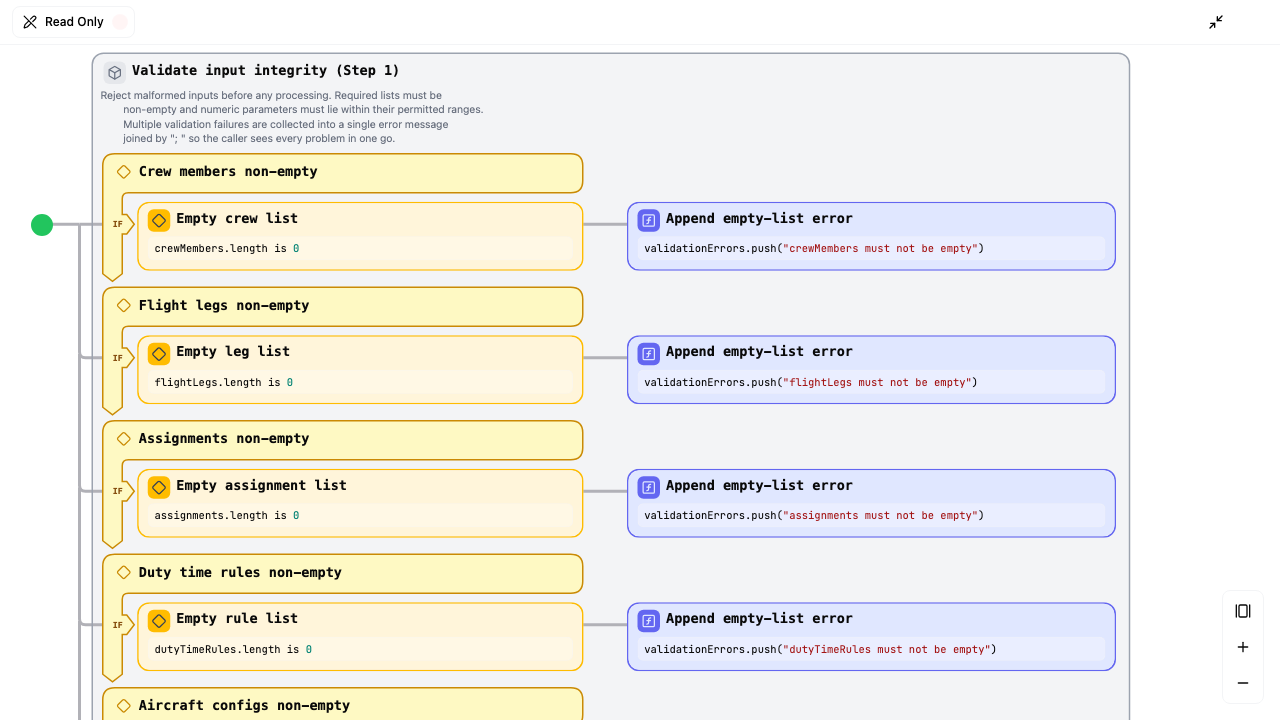
Airline Crew Assignment Validator
Validates a crew schedule against duty time, rest, qualification, complement, base airport, and monthly hour rules — powered by Leapter
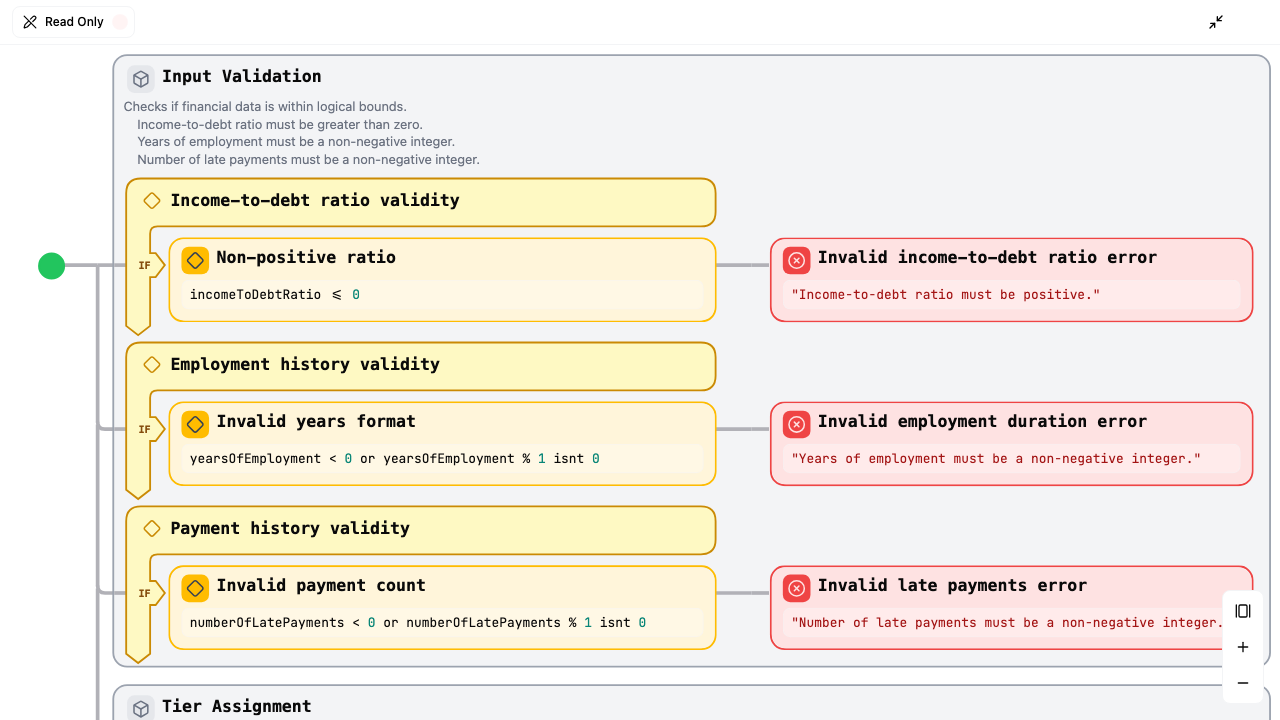
Credit Risk Scoring
A system for evaluating creditworthiness and assigning interest rates based on applicant financial data.
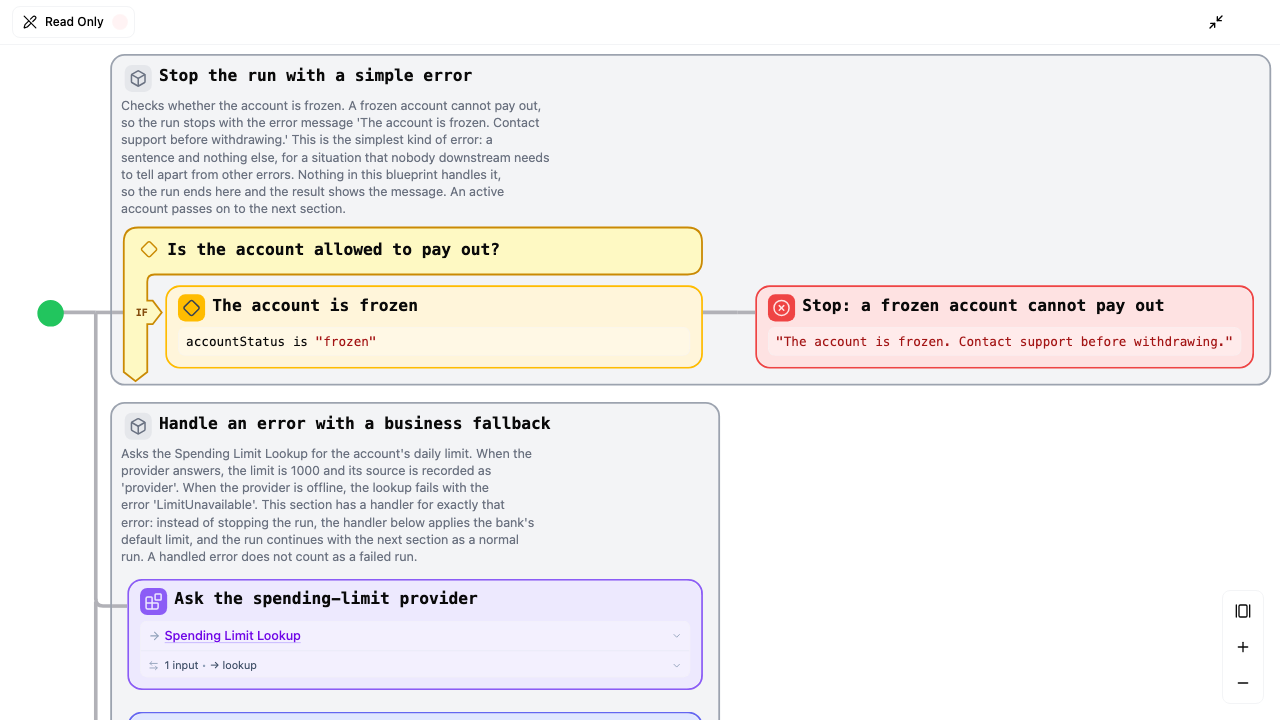
Error Handling Tour
Shows how a blueprint declares error types, stops a run with an error, handles one error with a business fallback, and passes the others on to the caller
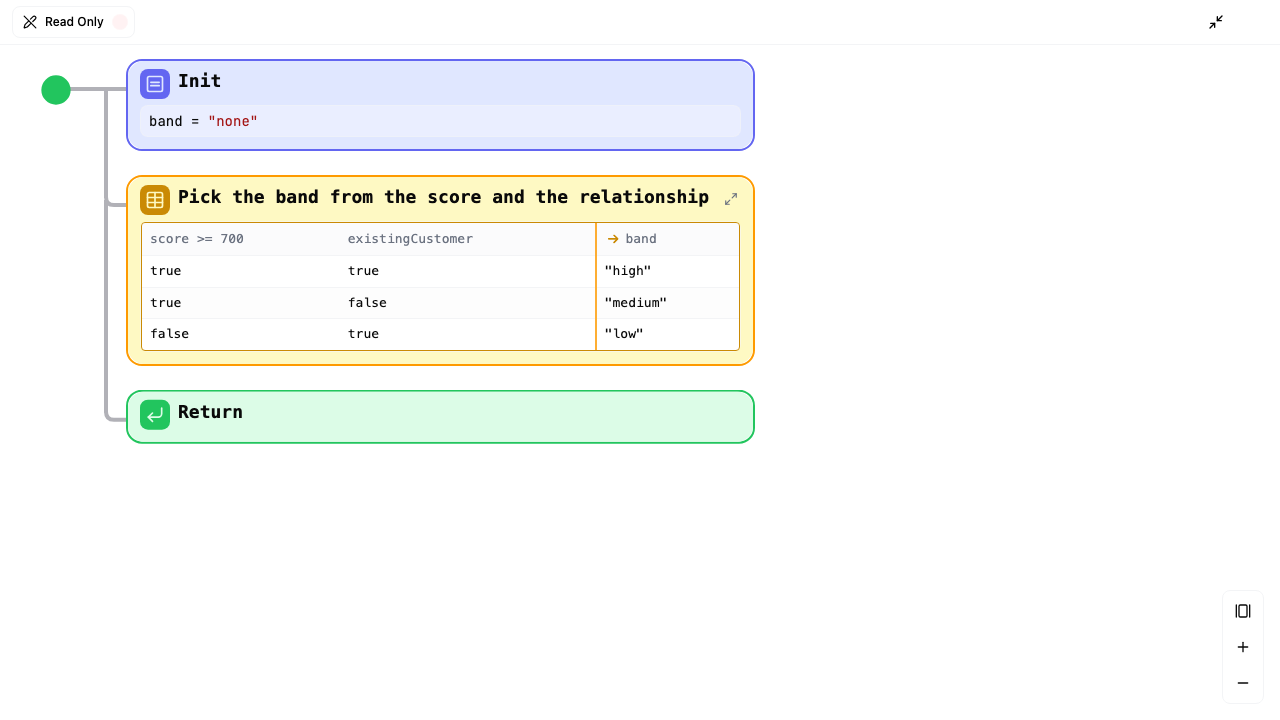
Governance Rules Starter
A complete validation rule library: an entry blueprint, four ready-to-use rules, and a deliberately sloppy blueprint that breaks every one of them. How it fits together: Governance Rules is the entry — the only blueprint that runs. It calls each rule and returns everything they found. Credit Limit Check is not a rule; it is the demo that violates them. How to use it: 1. Release this project, and in the release dialog open Options and tick "Mark as validation rule library". An ordinary release offers no rules. Confirm which blueprints are rules — the ones the entry calls are already ticked. 2. Open the project you want checked, go to Project settings → Validation rules, and add the rules you want from this library. 3. Their findings appear in that project's Findings list. They never block anyone from working, and only a project owner can add or remove them. Rules only ever run from a release, so what checks your projects is always a version someone approved — publishing a new version changes nothing until an owner accepts it. To watch the rules fire, add them to this project too: Credit Limit Check breaks all four. The library also reports its own rule blueprints — "Credit decisions must log" fires on anything named after credit, which includes the rule checking for it. That is the rules working, not a bug.
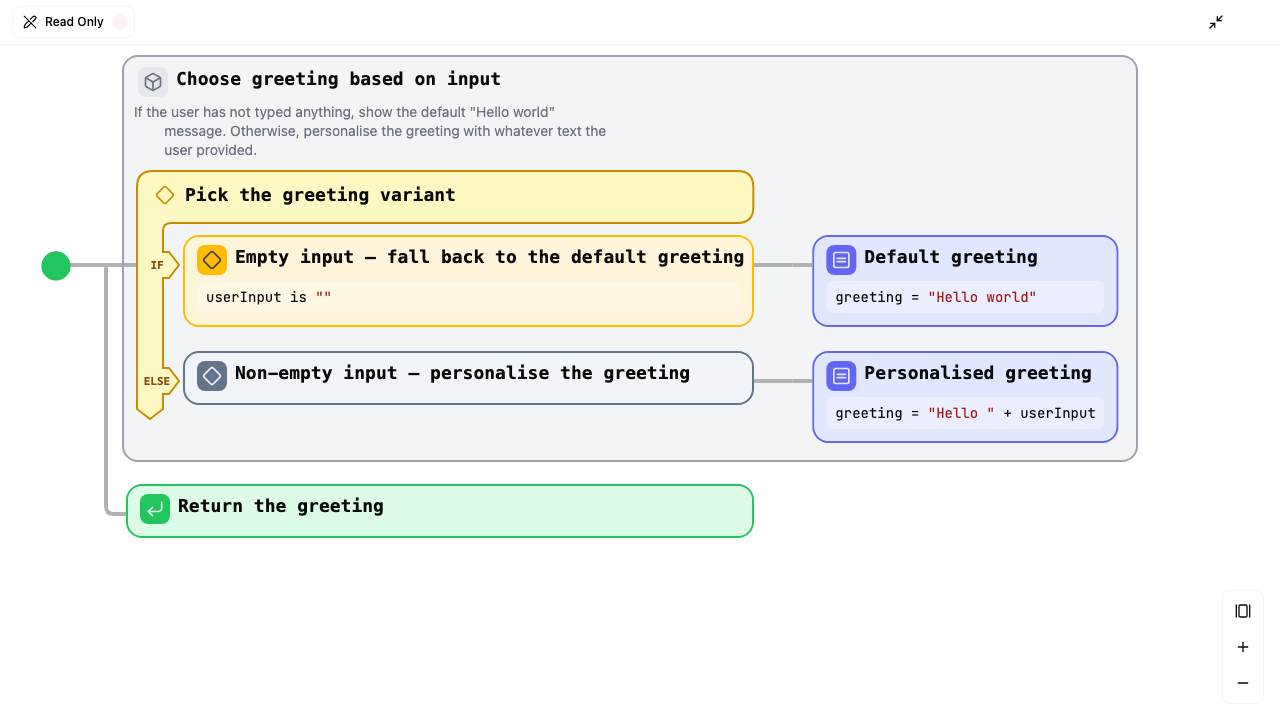
Hello World
A minimal greeting blueprint that demonstrates inspectable Leapter logic
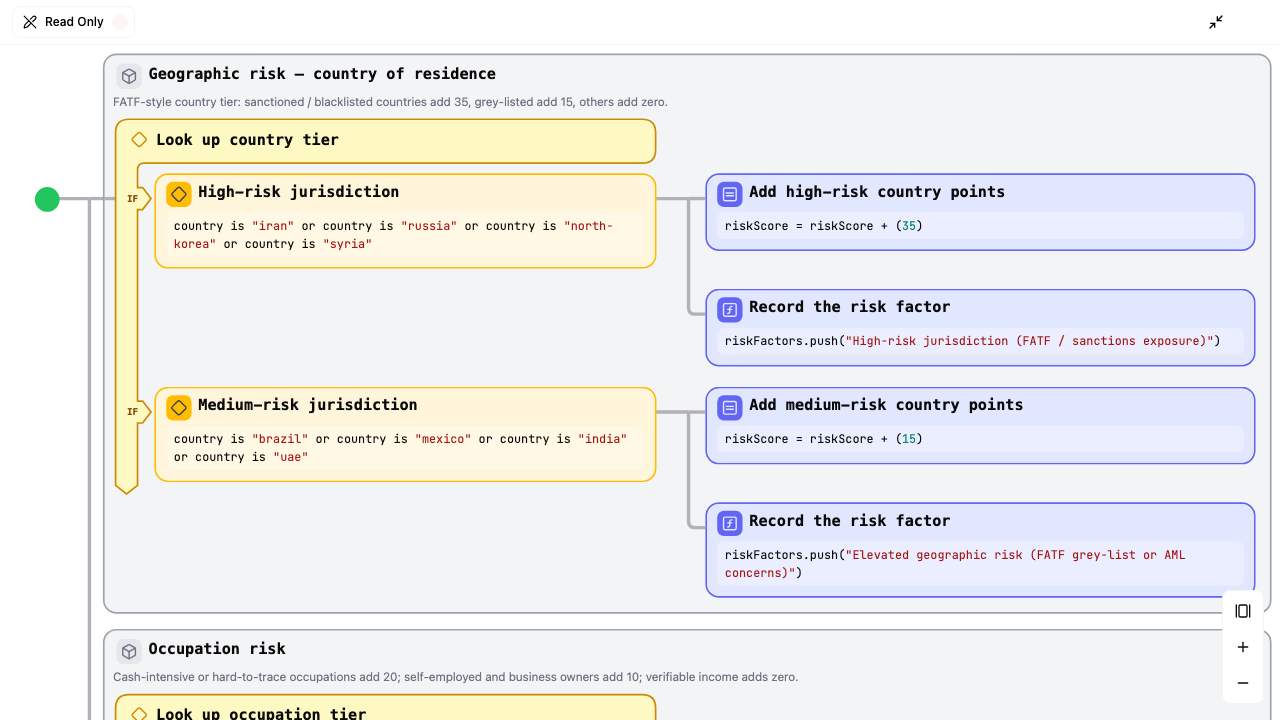
KYC Risk Screening
Demo onboarding tool that screens an individual customer and produces a risk rating, decision, and explanation — powered by Leapter
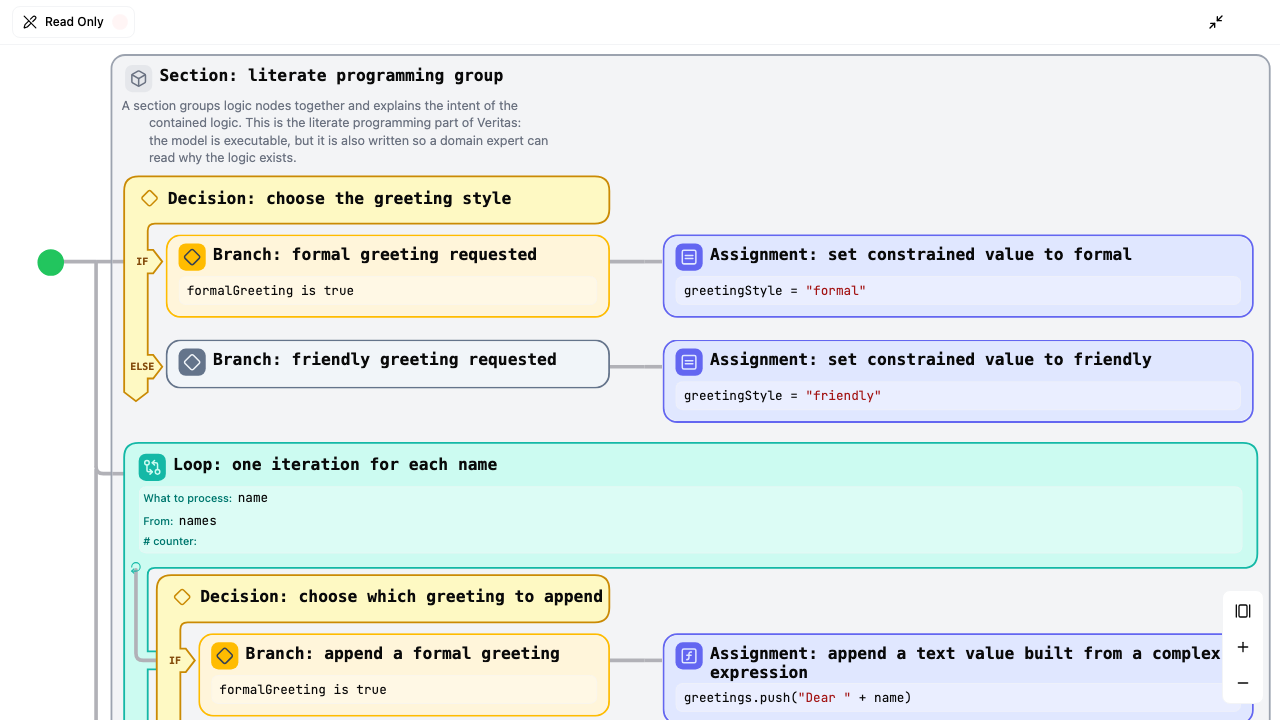
Leapter Blueprint Tour
Demonstrates the basic nodes of a Leapter Blueprint: sections, assignments, decisions, and loops
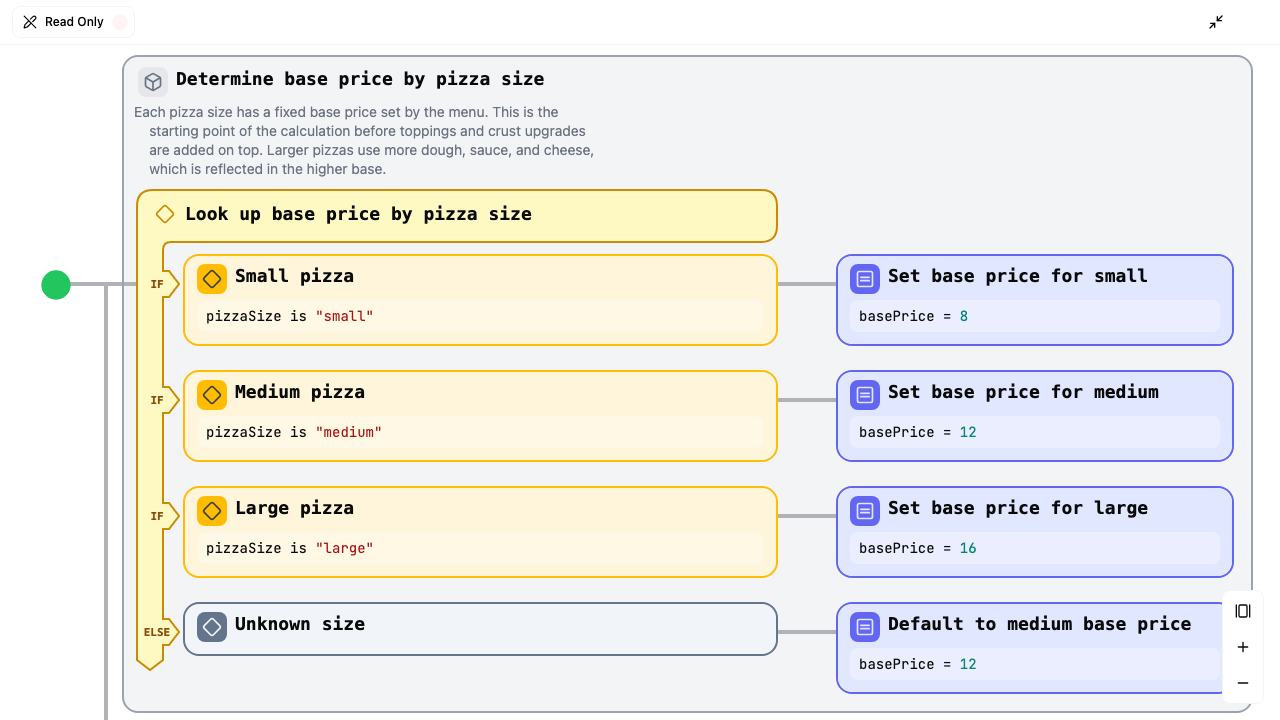
Pizza Pricing Calculator
Calculates pizza prices based on size, toppings, crust, and the day of the week
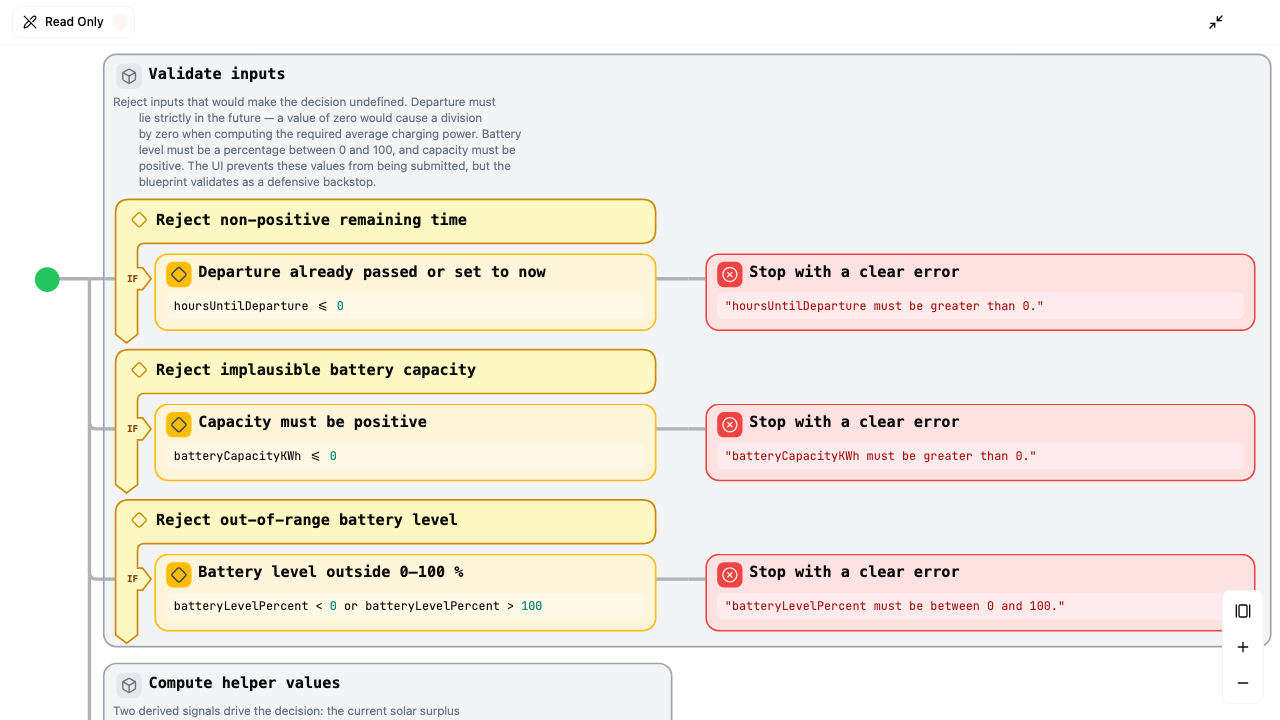
Solar Surplus Controller
Decides EV charging power from rooftop solar surplus, with a deadline override when the car must be ready in time — powered by Leapter
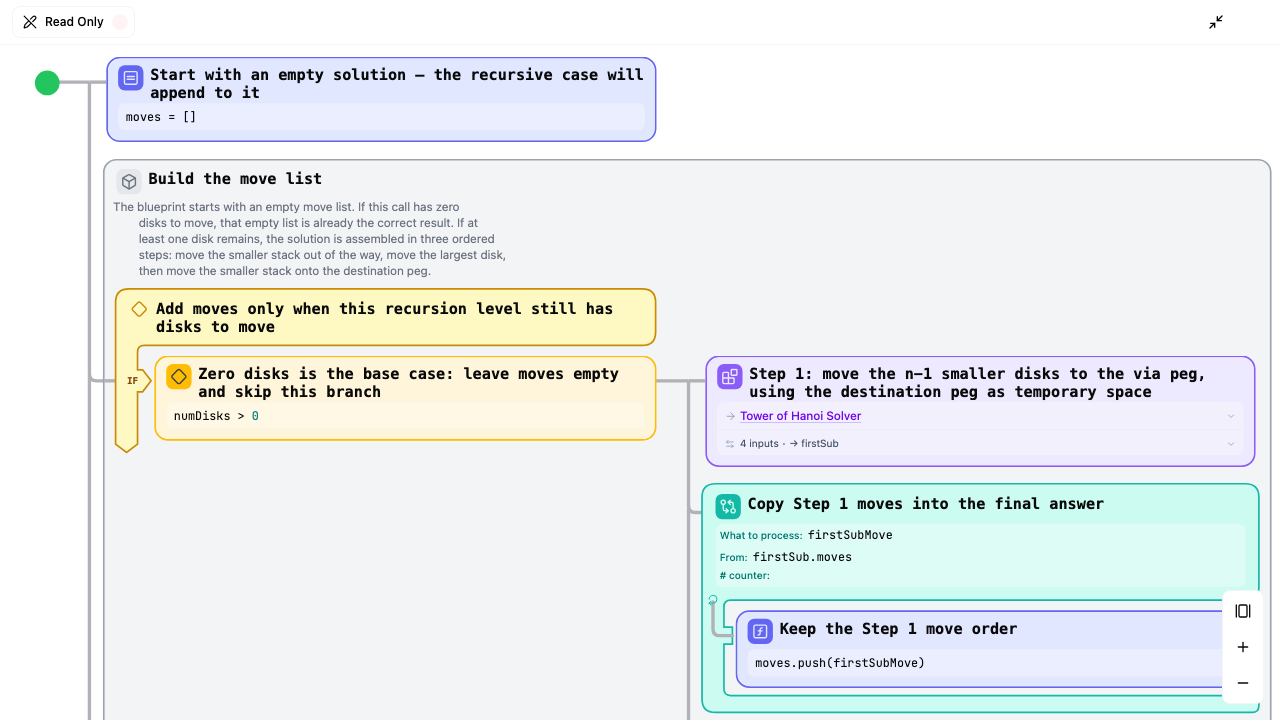
Tower of Hanoi
Solve the Tower of Hanoi puzzle by recursion — powered by Leapter
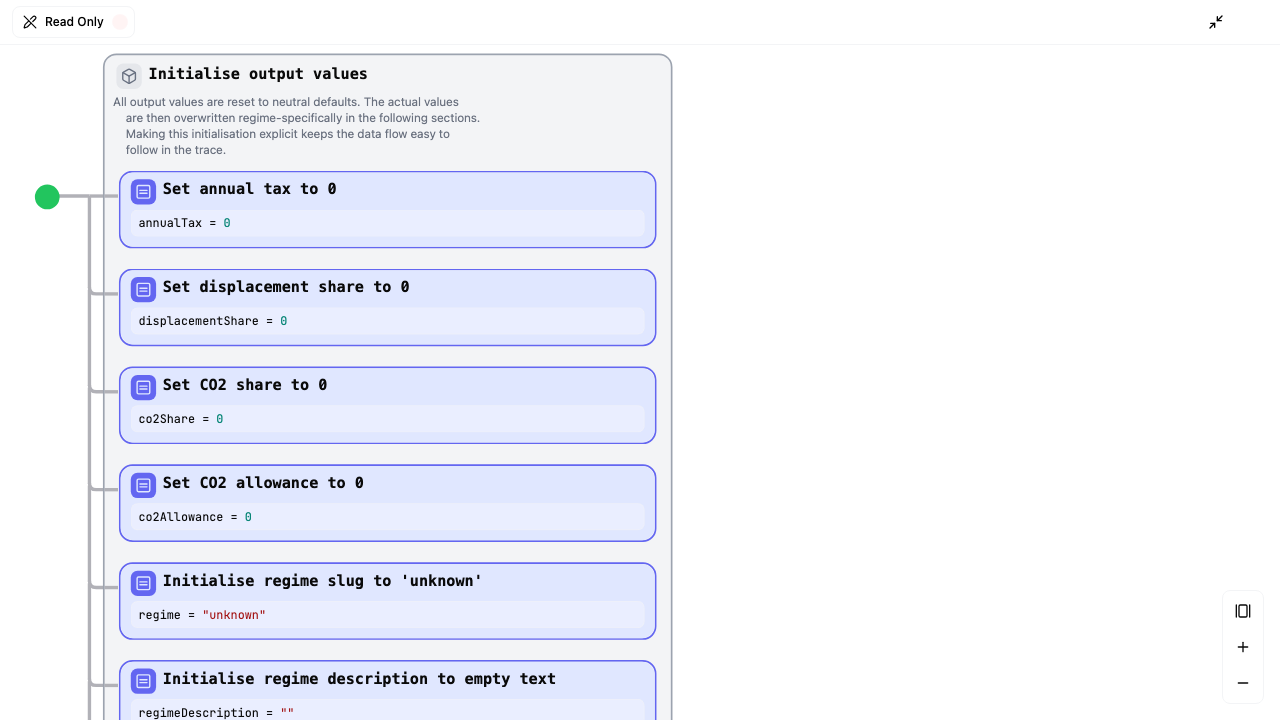
Vehicle Tax Calculator
Computes the annual German motor vehicle tax (Kfz-Steuer) for passenger cars — based on first registration, engine type, displacement, CO2 emission and emission class
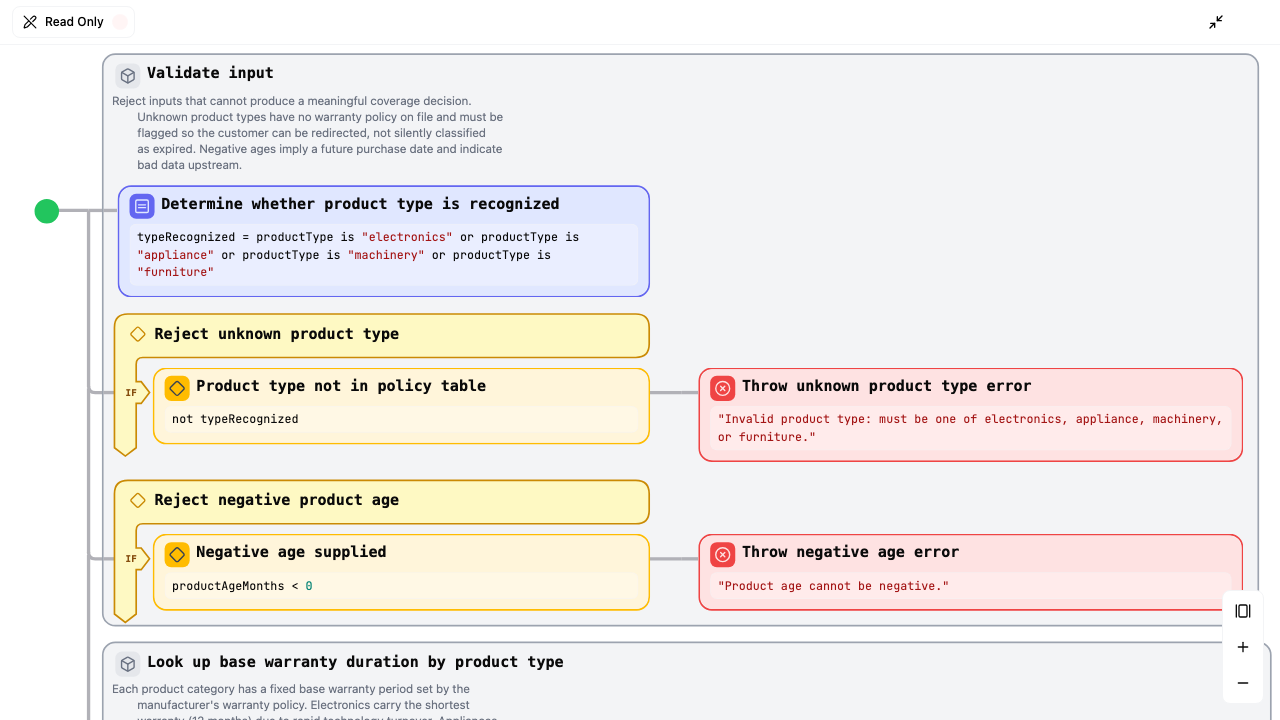
Warranty Coverage Classifier
Classifies a product's warranty coverage based on type, age, usage intensity, and premium status — powered by Leapter
How it works